Find and Fix Laboratory Workflow Bottlenecks
Find laboratory delays by tracking handoffs, measuring waiting time, testing one fix, and checking quality alongside speed.
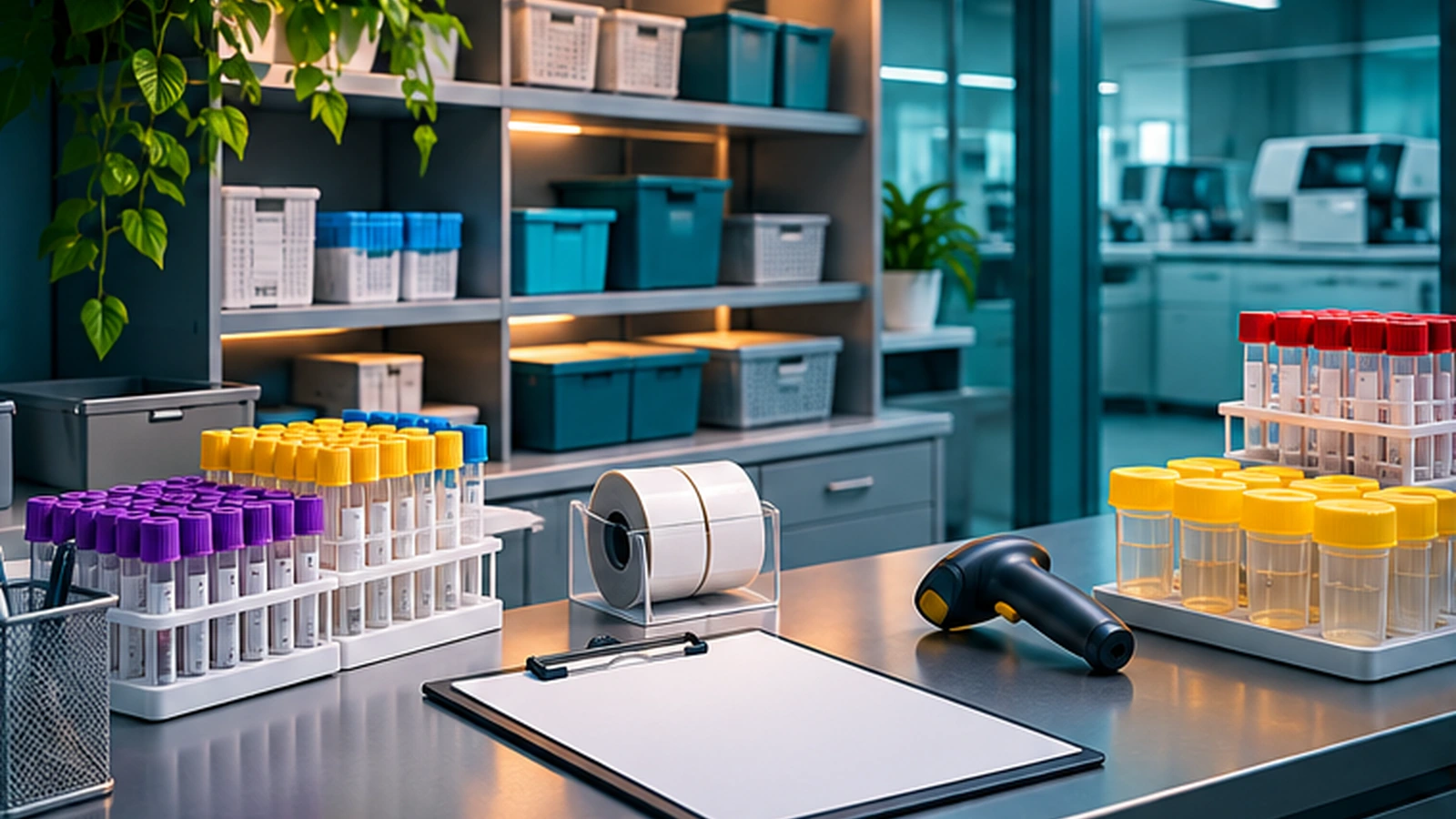
A laboratory can have enough analyzers and still report results late. Sometimes the delay happens before testing, when samples wait to be registered. Sometimes the analyzer is ready, but the rack is missing a specimen. Or the test is complete and the report waits for review. The right solution depends on where work is actually queuing.
The first rule is simple: measure the process before blaming the people. Staff may look busy because the workflow forces them to repeat steps or search for missing information.
Step 1: choose one workflow to observe
Pick a common test pathway, such as a routine chemistry sample from arrival to final report. Note the time of each major event: arrival, identification and accessioning, preparation, analytical start, result ready, technical review, and report released. Use real timestamps where available and de-identified examples when discussing individual cases.
Look for long waits between activities rather than assuming the most visible or expensive machine is the bottleneck. A workstation with a persistent pile of tubes may be a symptom of a slow earlier handoff or a report-approval rule downstream.
Step 2: separate work time from waiting time
Work time is the period spent actively collecting, preparing, measuring, or reviewing a specimen. Waiting time is time spent in a queue, waiting for transport, missing data, or an available operator. Total turnaround time includes both.
For example, a sample may spend only ten minutes on the analyzer but an hour waiting for an order correction. Buying a faster analyzer will not solve that bottleneck. Review the timestamps before investing in new equipment.
Step 3: check the common trouble spots
At intake, look for missing orders, inconsistent identifiers, labels printed too early, and repeated manual entry. At preparation, review centrifugation timing, batching rules, specimen routing, and availability of supplies. At the bench, look for avoidable instrument downtime, unclear reflex-test procedures, or unbalanced task assignment. At reporting, examine results held for verification, unresolved flags, and handoffs between shifts.
Record reasons for waiting in a short list rather than one catch-all label of 'staff delay.' Common reasons include missing clinical information, unsuitable specimen, analyzer issue, lack of reagent, and a waiting authorization.
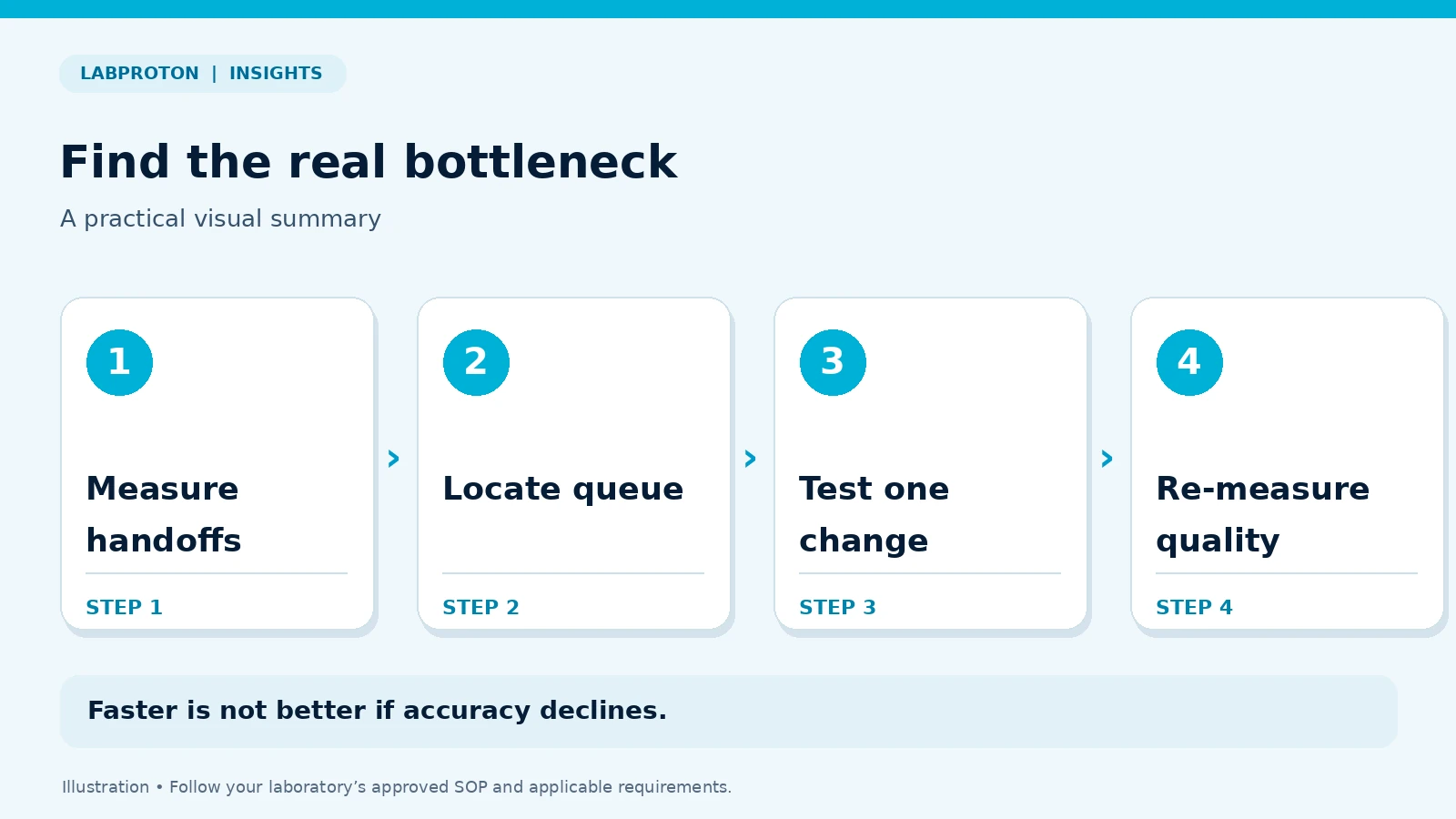
Step 4: make one controlled change
Choose the largest preventable problem that staff can realistically address. Examples include an early check for order completeness, a dedicated space for exception specimens, pre-staging supplies before a predictable morning rush, or clearer responsibility for reviewing completed results. Do not shorten turnaround time by skipping identification, required quality control, or authorization.
Tell the team exactly what is changing, why, and how success will be measured. Pilot the change for a defined period. If the solution relies on one unusually fast employee, it may not be sustainable.
Step 5: compare the result fairly
Measure the same process before and after the change. Consider case mix, daily volume, staffing, instrument maintenance, and urgent versus routine specimens. Review both median turnaround time and the longer delays that affect a smaller number of patients; one average can hide extreme cases.
Also watch for unintended effects. A faster registration step is not an improvement if labeling errors increase. Look at rejection rates, QC incidents, report amendments, and staff feedback alongside speed.
A practical five-day test
Monday: observe the queue. Tuesday: count the most common delay reasons. Wednesday: agree on one small fix. Thursday: test it with staff input. Friday: review early delay and quality indicators. Continue monitoring over representative days or weeks before declaring that the change works; one Friday is not enough evidence.
Reliable laboratory workflows are built from small, measured improvements—not constant pressure to hurry.
Example: the analyzer is not the problem
A chemistry analyzer processes a routine sample quickly, but the final report is delayed. Timestamp review shows that samples spend a long time waiting at accessioning, often because orders arrive with missing patient details. The analyzer itself has available capacity. Buying a faster instrument would not remove the queue.
The team tests a simple intervention: a clearly marked order-clarification station, a standard request for missing information, and a named person who follows up with collection sites. Over the next few weeks it measures intake waiting time and the number of delayed cases, while also checking identity mismatches and specimen rejection rates. If speed improves without new safety problems, the change may be worth keeping.
Avoid: measuring only the total number of daily tests, blaming the busiest employee, or prioritizing turnaround speed over sample identity and quality rules. The bottleneck is the slowest necessary handoff, not always the most visible machine.
Common questions
Is average turnaround time enough to measure improvement?
No. An average can conceal a group of very delayed results. Review the distribution of times and distinguish urgent from routine testing where appropriate.
How do we know a faster process is still safe?
Track quality alongside speed: identification mismatches, specimen rejection, QC events, corrected reports, and staff feedback. A speed gain that increases errors is not an improvement.
Reference leads
WHO, *Laboratory Quality Management System: Handbook* (2011); ISO 15189:2022 quality indicators and process improvement.

Specimen Accessioning and Labeling: Five Safe Steps
Follow five practical steps to match specimens and orders, check containers, apply barcodes, and document intake exceptions.
Read article →
Daily Laboratory QC: A Step-by-Step Bench Routine
A practical daily QC workflow: check materials, apply approved acceptance rules, investigate failures, and document decisions.
Read article →
Specimen Storage and Retrieval: A Practical Guide
Improve specimen storage and retrieval with clear location records, stability checks, chain of custody, and controlled disposal.
Read article →