A Practical Guide to Better Laboratory Billing
Practical ways to improve laboratory billing, reduce preventable claim problems, reconcile payments, and track overdue balances without sacrificing accuracy.
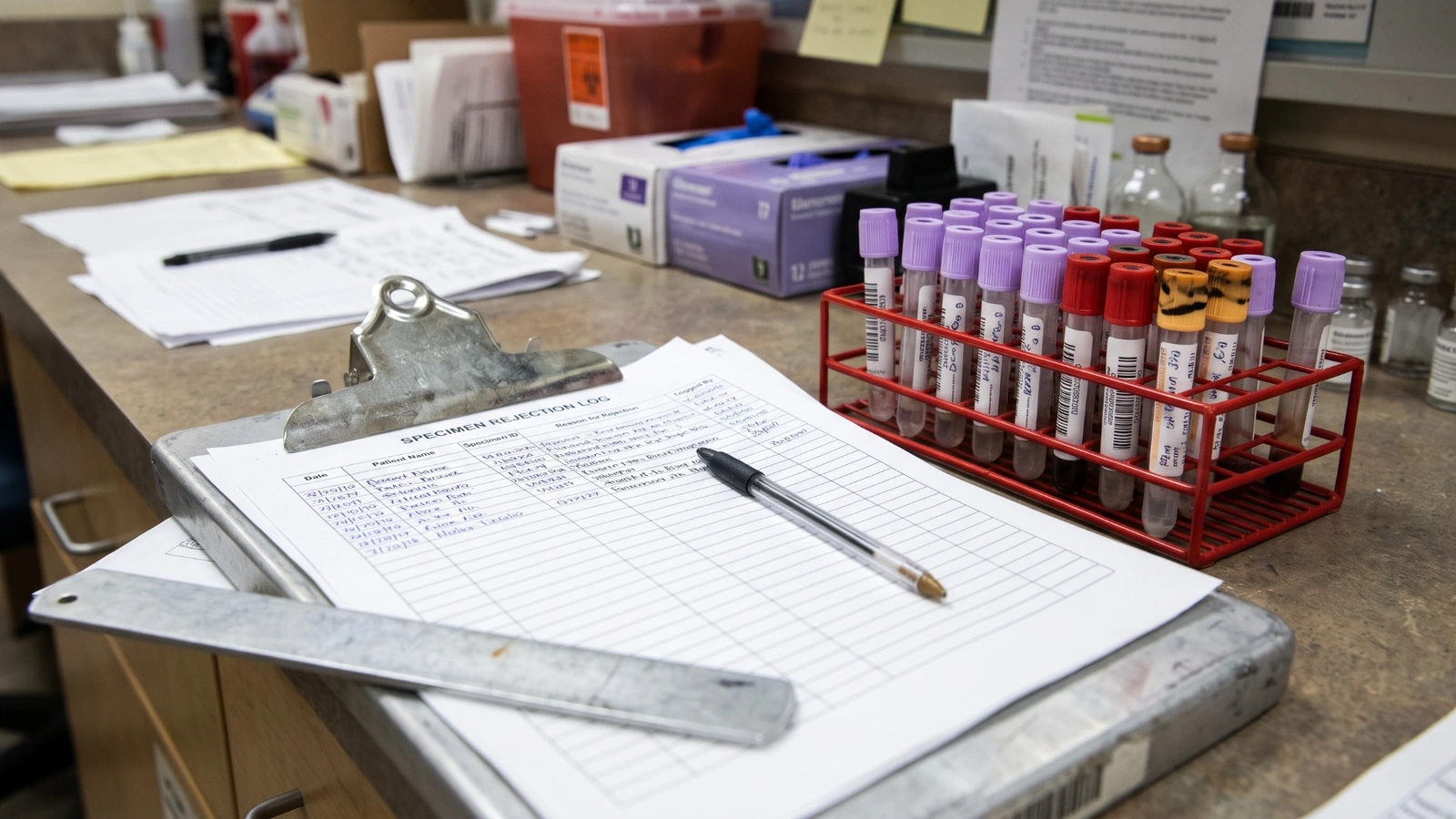
A laboratory can perform excellent testing and still struggle financially if invoices are unclear, patient details are incomplete, or unpaid balances are not followed up. Billing is not a separate activity that starts after a report is printed. It begins when the laboratory accepts an order, identifies who will pay, and records the services actually performed.
Good billing management has two goals: charge correctly and make the payment process understandable. The exact rules depend on the country, payer, contract, and type of laboratory. A walk-in laboratory collecting cash needs a different workflow from a laboratory billing multiple insurance companies.
1. Map what happens to every order
Follow one typical patient visit from registration to final payment. At each step ask who records the information, where it is stored, and who checks it. For example: registration creates a visit, a clinician's order identifies the requested tests, the bench records what was actually performed, and finance creates an invoice or claim. If these steps are disconnected, a cancelled test may still be billed, a performed test may be missed, or a payment may be posted against the wrong visit.
Write the process down on one page. Mark the handoffs between reception, technical staff, and finance. The most useful improvement is often a small one: requiring a clear visit identifier on every invoice, or reconciling completed tests with charges before closing the day.
2. Make registration accurate without making it slow
Confirm the patient's identity using the laboratory's approved identifiers. Record the payer, payment arrangement, and contact details needed for billing; avoid collecting unnecessary personal information. Where insurance is involved, check the member information and eligibility through approved channels. An eligibility check is not a guarantee that a particular test will be covered or paid.
A good registration screen should make required fields obvious and provide a way to correct genuine mistakes with an audit trail. Staff should not have to invent values to bypass a mandatory field. If an order or payment detail is uncertain, mark it for clarification rather than silently guessing.
3. Prevent avoidable claims problems
For insurance-billed work, separate a rejected claim from a denied claim. A rejection usually means a claim failed an initial submission or formatting check and needs correction before processing. A denial generally means the payer processed the claim but did not approve payment, in whole or in part. Your country and payer may use different terminology.
Common causes include a missing identifier, an invalid payer code, a service outside the contract, a missing authorization, or incomplete supporting documentation. In the United States, CPT and ICD-10-CM coding and payer-specific medical-necessity rules may matter; the appropriate coding system and reimbursement rules vary elsewhere. This article is a workflow guide, not legal, coding, or reimbursement advice. Laboratory personnel should never select or alter a diagnosis simply to obtain payment. Clinical documentation belongs to the authorized clinician.
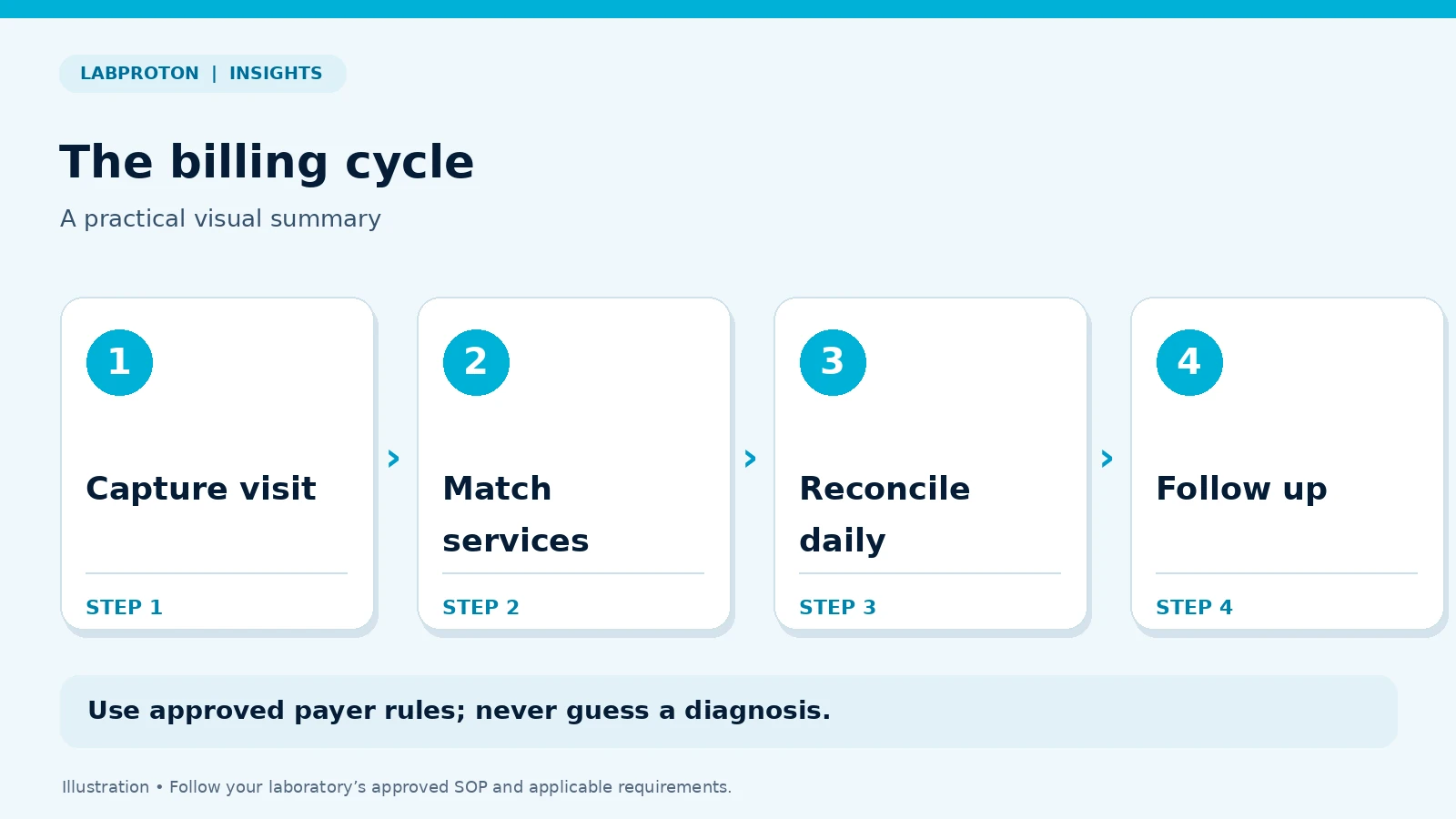
4. Make daily reconciliation a routine
At closing time, compare three lists: completed visits or services, issued invoices, and received payments. Explain discrepancies before they accumulate. A daily check should answer whether every completed billable service appears on an invoice, whether refunds or cancellations were authorized, and whether cash, card, and electronic receipts match the recorded totals. Keep the value of billed work separate from money actually collected; an invoice is not a payment.
For example, if 42 visits were completed, 41 invoices exist, and one visit was legitimately cancelled, the figures may be correct—but the cancellation should be documented. Comparing totals alone cannot tell you whether the right patient was charged. Sample individual visits as well.
5. Follow up without losing the history
Maintain an aging list for unpaid invoices or claims. Group it by payer, reason, and number of days outstanding. Assign each item an owner and a next action, such as correcting a data error, obtaining missing documentation, or contacting a patient under the laboratory's approved policy. Track adjustments and write-offs separately from payments, so apparent revenue does not hide losses.
Three helpful indicators are the percentage of invoices paid within the expected period, the value of outstanding balances, and the rate of corrected or resubmitted claims. Compare trends over time instead of relying on a single busy day.
A practical first-week improvement plan
Day 1: Document the registration-to-payment flow. Day 2: Inspect ten recent invoices for mismatches with completed services. Day 3: Review overdue balances and identify repeat causes. Day 4: Create a simple reconciliation checklist. Day 5: Train the reception and finance staff using real, de-identified examples, then choose one indicator to review weekly.
The aim is not to chase every payment more aggressively. It is to make the process correct, traceable, and respectful to patients from the first step.
Example: a payment discrepancy that becomes easy to find
Imagine a small laboratory completes 60 visits during a busy morning. The system shows 60 test orders but only 58 invoices. The difference does not automatically mean two bills are missing: one visit may have been cancelled, or an invoice may combine several tests. Rather than adjusting the total by hand, the finance clerk reviews the two unmatched visit identifiers. One was legitimately cancelled and has a documented reason; the other was completed but marked 'pending' when the receptionist was interrupted. The second invoice can now be issued and the correction recorded.
A useful reconciliation sheet lists visit ID, billable services, invoice status, payment status, exception reason, and person responsible. It avoids relying on total cash alone and catches errors before they become old balances. If a payer disputes an invoice later, the lab can reconstruct the sequence without relying on anyone's memory. That is the real value of keeping clinical and financial records aligned.
Avoid: changing diagnosis codes to make a claim pass, deleting cancelled visits to balance totals, or making unexplained adjustments to cash figures. These actions can damage the reliability of both financial and patient records.
Common questions
What should a small laboratory measure first?
Start with daily reconciliation and outstanding balances. These measures show whether charges were recorded and whether expected money has been received. If insurance claims are common, add rejection and denial reasons so repeated problems can be fixed upstream.
Can a LIMS replace professional billing review?
Not necessarily. A LIMS may support patient, visit, price, invoice, and payment records, while eligibility checks, claim submission, coding, and payer-specific rules can require different software or specialized staff. Verify actual product capabilities before promising integration or automation.
Reference leads
Relevant national payer or insurance guidance; in the United States, the CMS Medicare Claims Processing Manual, Chapter 16 (Laboratory Services). Legal and coding requirements must be checked for the intended market.

Laboratory Inventory: Reduce Waste Without Running Out
Reduce reagent waste with FEFO rotation, realistic reorder points, traceable stock records, and a simple monthly inventory review.
Read article →
Laboratory Software Security: Access, Backups, and Audit Trails
Protect laboratory records through role-based access, secure devices, verified backups, meaningful audit logs, and response planning.
Read article →
How to Reduce Avoidable Specimen Rejections
Reduce avoidable specimen rejections with clear acceptance criteria, consistent rejection-rate tracking, and targeted collection improvements.
Read article →